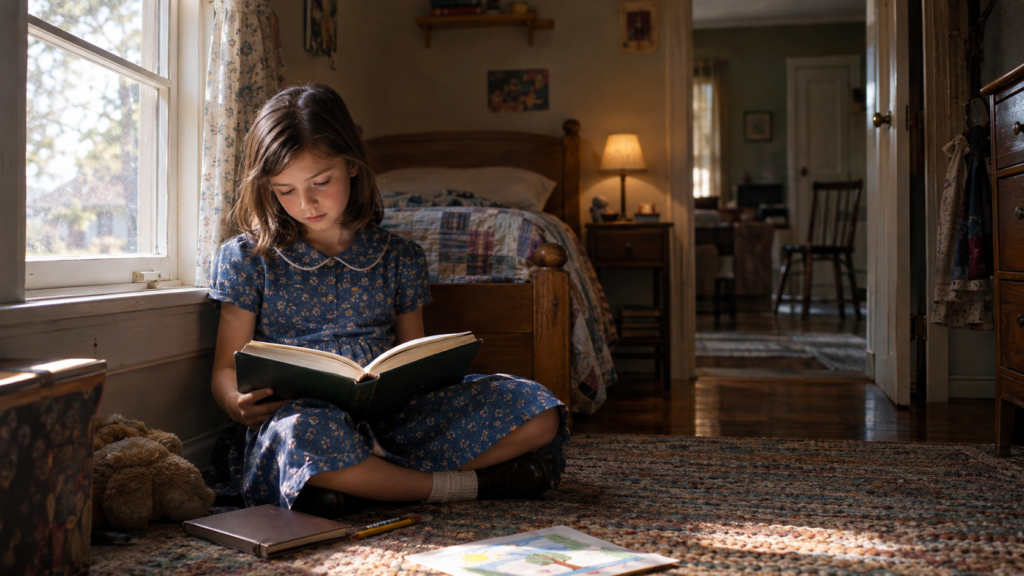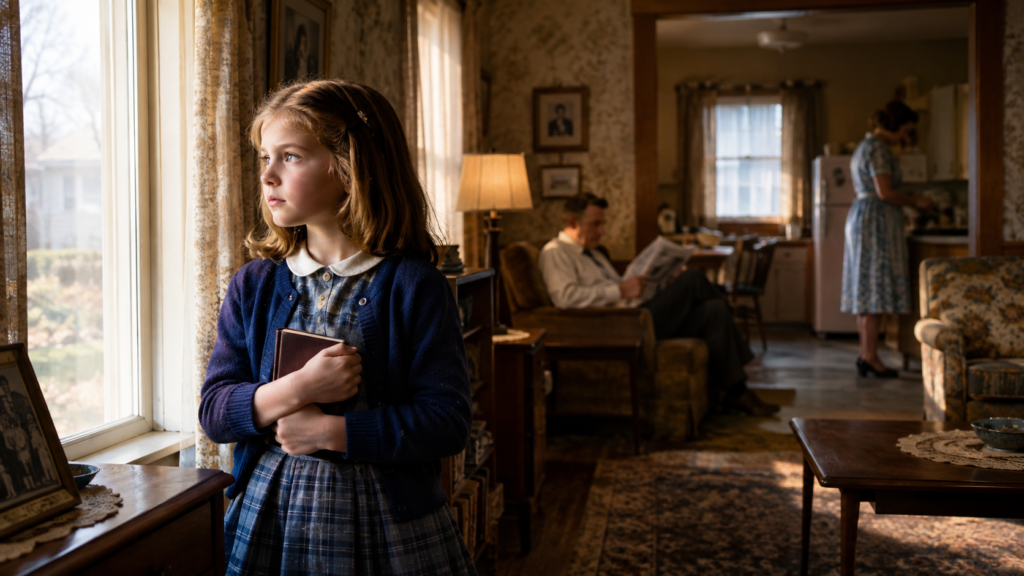
Memoirs that explore the bond between parent and child often reveal as much about what is left unsaid as what is spoken aloud. When a child grows up in a home marked by conflict, addiction, or abuse, the story they tell carries a particular kind of weight—a voice that is at once innocent and knowing, trusting and betrayed. Books about childhood family relationships offer readers a window into these delicate, often painful dynamics, and few recent examples illustrate this as powerfully as Cindy Meadows’ memoir, I Am Your Daughter.
This book traces a young girl’s life from the 1950s through the late 1960s, growing up in a working-class Michigan household where love and harm coexist in ways that are both ordinary and devastating. Through her evolving voice, we witness how children absorb, interpret, and survive the turbulence around them. This blog will explore what such memoirs teach us about childhood family relationships, why the child’s perspective matters, and how we can better understand and support children growing up in troubled homes.
Understanding Childhood Family Relationships
The relationships a child forms with their parents and siblings become the blueprint for every relationship that follows. In homes where love is inconsistent, conditional, or withheld, children develop complex coping mechanisms—some adaptive, some destructive. Books about family relationships help us see these patterns with clarity, offering both recognition and, sometimes, a path toward healing.
In I Am Your Daughter, Cindy Meadows captures this complexity with remarkable precision. Her parents are not monsters; they are flawed, struggling people shaped by their own Depression-era childhoods, limited education, and unexamined pain. Her father can be tender—”That is my little girl in there, and I am going to comfort her,” he tells nurses when Cindy Meadows is hospitalized as a toddler, and also violent and sexually abusive. Her mother provides material comfort and shows love through action, yet rarely offers the physical affection or emotional validation she craves.
This duality is what makes the memoir so instructive. It refuses to reduce family relationships to simple categories of good and bad. Instead, it shows how books about childhood and family connection can capture the messy, contradictory reality of loving people who also hurt us.
Why the Child’s Voice Matters in Understanding Family Dysfunction
Adults often narrate family dysfunction from a place of hindsight, analysis, or blame. The child’s voice is different. It is immediate, sensory, and unadorned. When a child says, “I didn’t know what to do,” or “I felt confused,” they are not offering interpretation—they are offering experience.
Cindy Meadows’ memoir is structured around this principle. As she notes in the opening, “This story is told in the daughter’s voice, which changes as she ages.” We see this evolution clearly:
Early childhood (ages 4–7): Simple observations, trust in adults, a world where things are what they seem.
“The doctor said it was measles, and my parents rushed me to the hospital, and the nurses put me in a glass hospital room because I was contagious.”
Middle childhood (ages 8–12): Growing awareness of unfairness, beginnings of moral reasoning.
“I felt confused and sad. ‘Dad, no, I want to go home,’ a tear trickled down my cheek.”
Adolescence (ages 13–17): Introspection, questioning, emotional complexity.
“I feel confused at home. My parents say how they feel about things. Mostly with rules, but sometimes with conversation, but I am usually careful about what I say to them because of the respect thing.”
This evolution is one of the reasons I Am Your Daughter stands among the best childhood family relationship stories. It doesn’t tell us what to think—it lets us feel what the child felt, in the language the child had at the time.
How Children See Family Conflict: The Innocent Voice
Children see family conflict differently from how adults do. They lack context. They assume responsibility. They believe what they are told, even when it contradicts what they see and feel. In I Am Your Daughter, we see this repeatedly:
-
When Cindy Meadows’s father molests her at age seven, he tells her, “this is a special way I can show I love you.” She doesn’t understand what is happening, but she trusts her father. Later, she writes, “I love my dad, but this didn’t feel ok.”
-
When her father dismisses the neighbor’s inappropriate touching—”I think he was just being friendly, honey”—Cindy Meadows learns that adults will not always protect her.
-
When her mother tells her to “be happy” and reminds her she has “a lovely home and nice clothes,” Cindy Meadows learns to suppress her negative emotions and perform contentment.
This is the innocent voice: trusting, vulnerable, and trying to make sense of a world that doesn’t make sense. Top parent child relationship books often focus on the parent’s perspective or the adult’s retrospective analysis. What makes I Am Your Daughter distinctive is its commitment to staying inside the child’s experience, even when that experience is painful to witness.
Growing Up in a Dysfunctional Family: Signs and Long-TermEffects
Dysfunction in families takes many forms. In Cindy Meadows’ memoir, several are present simultaneously, creating a layered, cumulative impact.
1. Secrets and Silence in the Home
The family motto, repeated throughout the memoir, is: “What happens in this house stays in this house.” Cindy Meadows is told not to tell the neighbors about her father’s drinking, not to tell her mother about the molestation, and not to tell anyone about the rape. This silence becomes a kind of prison. “I knew that I had to keep this secret.”
2. A Parent Who Drinks or Uses Substances
Her father drinks heavily—beer at home, at the bar after work, throughout the weekend. His drinking is linked to his violence, his absence, and his inappropriate behavior. The memoir shows how alcoholism shapes family life: the unpredictability, the fear, the way children learn to read a parent’s mood before speaking.
3. Physical or Emotional Abuse Between Parents
On Christmas Eve, she hears her father hitting her mother. The next morning, she sees the bruises on her mother’s arms. Her mother tells her to “smile and go on.” This is the model Cindy Meadows learned for how to respond to abuse: endure it, hide it, pretend it didn’t happen.
4. Emotional Neglect and Lack of Affection
Her mother rarely hugs her or tells her she loves her. When she asks her mother if she is proud of her, the response is often silence or a change of subject. Cindy Meadows writes:
“She does not say I love you or that she is proud of me. She shows it in other ways.” This absence of affection leaves her yearning for connection, a longing that follows her into adolescence and adulthood.
5. Rigid Rules and Fear-Based Discipline
Cindy Meadows’ father keeps a razor strap, though he rarely uses it. His anger is unpredictable; his rules are enforced through fear. She learns to tiptoe around him, to read his moods, to avoid provoking him. This hypervigilance is a common survival strategy for children in dysfunctional homes.
Domestic Violence in the Home:What Children See and Remember
Children who witness domestic violence are not just observers—they are participants in a world of fear and uncertainty. They hear the fights, see the bruises, feel the tension. They often blame themselves, believing they could have prevented it or that they are the cause.
In I Am Your Daughter, Cindy Meadows describes hearing her parents fight, seeing her mother’s injuries, and feeling powerless to help. She also experiences violence directly—from her brother, who breaks her nose, and from her father, who rapes her. What can we do to support children in these situations? Below are some strategies:
1. Remove the Child from Danger
If a child is in immediate danger, call emergency services. Safety is the first priority.
2. Tell Them It Is Not Their Fault and They Are Not Alone
Children often believe they are responsible for the abuse or that they deserve it. Repeatedly, clearly, and gently remind them: “This is not your fault. You are not alone. You deserve to be safe.”
3. Seek Professional Support
Trauma-informed therapists, school counselors, and child advocacy centers can provide critical support. In the memoir, Cindy Meadows finds some relief through her school guidance counselor, who listens and helps her understand her feelings.
4. Create a Long-Term Safety Plan
Safety is not a one-time event—it is an ongoing process. This may include legal protections, safe housing, and a network of trusted adults.
How Children Survive Troubled Homes: Actionable Steps
Despite the odds, children find ways to survive. Cindy Meadows’ memoir illustrates several strategies that helped her cope—and that may help other children in similar situations.
1. Find One Safe Adult
For Cindy Meadows, this was her grandmother—the one person who hugged her, listened to her, and made her feel loved. “She holds me close to her softness,” she writes. One safe adult can make a profound difference in a child’s life.
2. Create a Private Space
Cindy Meadows retreats to her basement, her notebook, her bedroom. These spaces offer privacy and the chance to process feelings without observation or judgment.
3. Write It Down
Cindy Meadows’s notebook is her confidant. “It helps to write down my thoughts and feelings,” she writes. Writing can help children externalize their emotions and make sense of confusing experiences.
4. Tell Someone When You’re Ready
It takes tremendous courage to speak about abuse. Cindy Meadows eventually tells her best friend, Janet, and later her school counselor. Both responses—support and validation—are crucial. Children need to know they will be believed.
Honoring Parents vs. ProtectingYourself: Faith and Abuse in the Home
For children raised in religious families, the commandment to “honor your mother and father” can create a painful conflict. How do you honor parents who hurt you? How do you reconcile faith teachings about forgiveness with the need to protect yourself?
Cindy Meadows grapples with this throughout her adolescence. She is baptized and confirmed in the Lutheran church, and she finds comfort in hymns, prayers, and the message that “Jesus loves the children.” Yet she also wonders:
“I learned in church to forgive and to accept what I don’t understand, but I’m not ready to do that. I feel confused. I don’t think God would want me to accept this. Maybe to forgive. When I can.”
Her school counselor helps her understand that she can set boundaries with her father without violating her faith. She can forgive when she is ready—but forgiveness does not mean allowing the abuse to continue.
This is an important message for the best family relationship books 2026 to convey: faith and safety are not in conflict. Honoring parents does not mean enduring abuse. It means finding a way to love them while also loving yourself.
The Neighborhood as Witness: Community and FamilyDysfunction
Family dysfunction does not happen in isolation. Neighbors hear the fights, see the bruises, and notice the absences. Yet they often stay silent—out of politeness, discomfort, or a belief that family matters are private.
In books about childhood family relationships, like I Am Your Daughter, the neighborhood is both a witness and a participant. The neighbor who touches Cindy Meadows inappropriately, the friends who notice her sadness, the extended family who gather for holidays and pretend everything is fine—these are all part of the fabric of her childhood.
Community can be a source of support or a source of silence. When neighbors, teachers, and extended family members speak up, they can change the trajectory of a child’s life. When they stay silent, they reinforce the message that what happens in the home is no one else’s business.
How to Heal from Childhood Trauma
Healing from childhood trauma is not a linear process. It involves acknowledgment, support, and a willingness to feel the feelings that were once too dangerous to feel. Below are some ways you can cope with childhood trauma:
1. Acknowledge the Trauma
The first step is naming what happened. Cindy Meadows writes about her experiences in her notebook, tells her friend, and eventually speaks to a counselor. Acknowledgment is not about blame—it is about truth.
2. Find a Trauma-Informed Therapist
Not all therapists are equipped to work with trauma. Look for someone who specializes in childhood trauma, abuse, or PTSD. Her school counselor provides a model of what supportive, non-judgmental listening can look like.
3. Practice Self-Care Daily
Self-care is not selfish—it is survival. For her, this meant painting, writing, walking in nature, listening to music, and spending time with friends. These small acts of care replenish the spirit and build resilience.
4. Reconnect with Your Inner Child
The child who was hurt, ignored, or betrayed still lives inside the adult. Reconnecting with that child—through therapy, journaling, or creative expression—can be a powerful path to healing.
If you want more information on this topic, see our blog “Popular Books About Childhood Family Trauma: A Comprehensive Reading Guide for Survivors.”
From Victim to Survivor: The Journey of the Innocent Child
The word “victim” describes what happened. The word “survivor” describes what came next. The journey from one to the other is rarely straightforward, but it is possible.
Cindy Meadows’ memoir ends not with a tidy resolution but with a young woman beginning to find her footing. She has a job, a husband, and a new apartment. She is still figuring out what love means, still learning to trust herself, still carrying the wounds of her childhood. But she is also writing, reflecting, and reaching out for help. She is surviving.
For readers of books about childhood family relationships, this is a familiar arc—not because it is easy, but because it is true. Healing takes time. It takes support. It takes courage to tell the truth, even when the truth is painful.
Recognizing Trauma in Children: Signs Parents and TeachersShould Know
Children rarely say, “I am being abused” or “I am traumatized.” They show us through their behavior. Here are some signs that a child may be experiencing trauma—and what to do about it:
Step 1: Learn the Signs — Educate Yourself on Trauma Symptoms in Children
-
Withdrawal from friends and activities
-
Sudden changes in behavior or mood
-
Difficulty concentrating or focusing
-
Regression to younger behaviors (bedwetting, thumb-sucking)
-
Frequent stomachaches or headaches with no medical cause
-
Hypervigilance or exaggerated startle response
-
Sleep disturbances or nightmares
-
Aggression or self-harm
-
Difficulty trusting adults
-
Overly compliant or “perfect” behavior
In I Am Your Daughter, Cindy Meadows exhibits many of these signs: she is shy, struggles to focus in school, retreats to her room, and learns to “eat her feelings.” She is also a “perfect” child who rarely gets in trouble—a common survival strategy for children in abusive homes.
Step 2: Create Safe Spaces — Make Home andClassroom Environments Predictable and Calm
Children who have experienced trauma need environments that are calm, predictable, and safe. This means consistent routines, clear expectations, and adults who respond with patience rather than punishment.
Step 3: Talk to the Child — Ask Gentle, Open-EndedQuestions Without Pressure
Avoid leading questions or demanding details. Instead, ask open-ended questions like, “How are you feeling?” or “Is there anything you want to talk about?” Let the child guide the conversation. If they don’t want to talk, don’t force it—let them know you are there when they are ready.
Step 4: Report and Refer — Contact Counselors, Social Workers, or Authorities
If you suspect a child is being abused or neglected, report it. You do not need to be certain—you only need to have reasonable suspicion. Contact your local child protective services, a school counselor, or a trusted professional. Reporting is not about getting anyone in trouble—it is about getting the child help.
Family Patterns: How to Recognize and Change Them
Family patterns repeat across generations unless someone chooses to break them. Books about childhood family relationships, like Cindy Meadows’ memoir, show how patterns of silence, addiction, and abuse are passed down—and how one person’s willingness to seek help can begin to change the trajectory.
Her parents grew up during the Depression, quit school in the eighth grade, and worked to help their families. They carried their own wounds and passed some of them on to their children. Cindy Meadows’ brother becomes angry and abusive. She marries young, repeating some of her parents’ patterns.
But Cindy Meadows also does something her parents did not: she talks to a counselor. She writes about her feelings. She begins to set boundaries. She starts to heal. Breaking family patterns requires:
Awareness: Recognizing the patterns and how they show up in your life
Accountability: Taking responsibility for your own behavior, even when you were also a victim
Support: Finding therapists, support groups, or trusted friends who can help
Patience: Healing is not linear, and change takes time
For more reading, explore our blog “From Abuse to Trust: Books on Father–Daughter Relationships in Adulthood for Survivors of Childhood Trauma.”
Conclusion
I Am Your Daughter by Cindy Meadows is more than a memoir—it is a testament to the resilience of the human spirit and a guide for anyone seeking to understand the lasting impact of childhood family relationships. Through the innocent, evolving voice of a child growing up in a troubled home, Cindy Meadows shows us what it means to love people who hurt us, to survive what should have broken us, and to begin the long journey toward healing.
For readers searching for books about childhood family relationships, this memoir offers both recognition and hope. It reminds us that the child’s voice matters—not just because it is innocent, but because it tells the truth. And it reminds us that no matter how troubled the home, there is always the possibility of healing.
If you or someone you know is growing up in a troubled home, know this: you are not alone. You are not to blame. And you deserve to be safe, loved, and heard. The journey from victim to survivor is not easy, but it is possible. And sometimes, the first step is simply telling your story.
Frequently Asked Questions
How do childhood family relationships shape a child’s emotional development?
Early family relationships form a child’s emotional blueprint, teaching them how to trust, express feelings, and seek comfort. In Cindy Meadows’ case, inconsistent affection and hidden abuse created confusion, anxiety, and a lifelong struggle to feel safe and loved.
How did Cindy Meadows experience her relationship with her parents during childhood?
Cindy Meadows experienced her father as both tender and terrifying—he showed affection through activities and hugs, but also drank heavily and abused her. Her mother provided material care and occasional fun but rarely offered emotional warmth or protection.
What role did sibling relationships play in Cindy Meadows’ childhood family life?
Cindy Meadows’ older brother, Kris, was the “golden boy” who teased, bullied, and physically hurt her while receiving fewer consequences. Despite the rivalry, she missed him when he left and hoped for a better relationship as they grew older.
How did family conflict affect Cindy Meadows while growing up?
Witnessing her parents’ fights, her father’s drinking, and her mother’s silence left Cindy Meadows anxious, hypervigilant, and prone to retreating into her room. She learned to suppress her feelings, “eat her feelings,” and keep family secrets.
How did family traditions and shared experiences influence Cindy Meadows’ childhood?
Traditions like holiday dinners, Easter egg dyeing, and family picnics gave her moments of joy, belonging, and normalcy. These shared experiences also taught her the value of gratitude, connection, and nature—even amid family dysfunction.
What happens next to Cindy Meadows? Does she find the love and healing she’s been searching for? There’s only one way to find out. Get your copy of I Am Your Daughter on Amazon and uncover her story today.
Leave a Reply
Your email address will not be published. Required fields are marked *